Through Rita Coburn’s direction and the commanding interpretations of Common, Jeffrey Wright, Viola Davis, and Courtney B. Vance, the film invites a new generation to engage with Du Bois not as a distant historical figure but as a living force whose voice and ideas continue to speak, challenge and inspire.
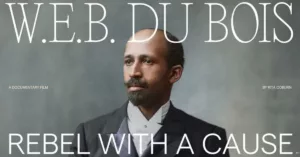
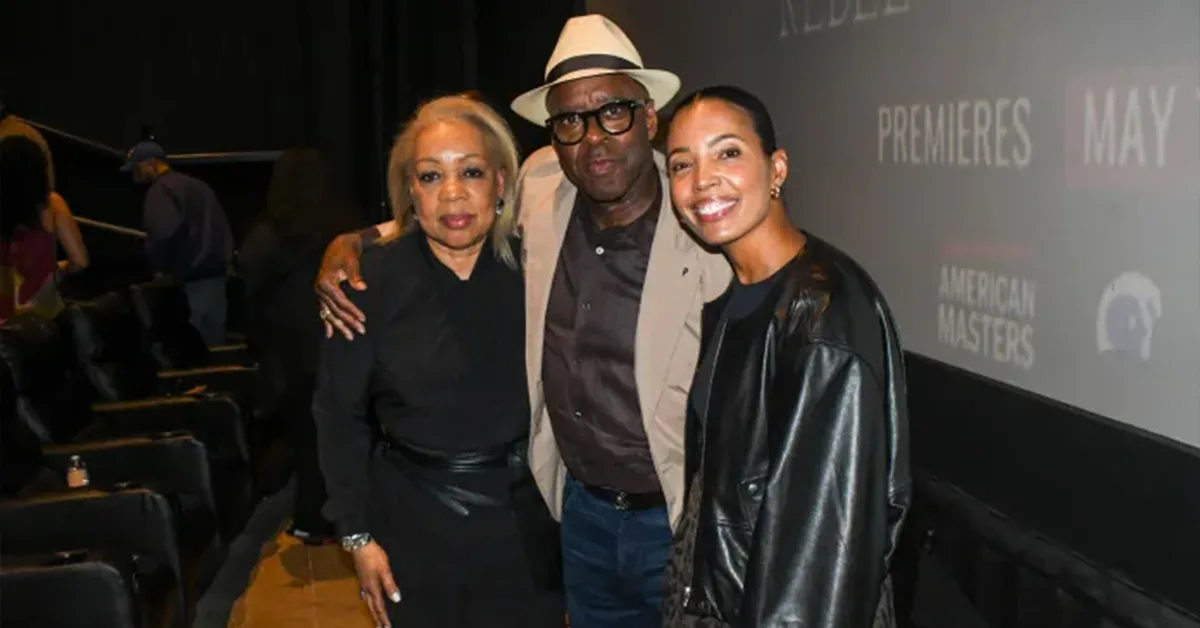
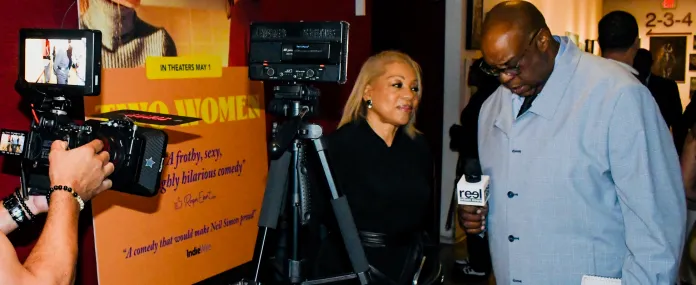
Rita Coburn, director of W.E.B. Du Bois: Rebel With a Cause, and actor Courtney B. Vance, who voices and embodies a seasoned Du Bois, shared their time and insight following the nearly two‑hour documentary’s screening. In conversation with an engaged audience, they discussed the film at length ahead of its highly anticipated PBS premiere on Monday, May 19, a landmark addition to the network’s storied American Masters series.
Jasmine Simpkins, reporter for Los Angeles‑based KTLA, moderated the panel and opened by asking Coburn about the time it took to complete the documentary.
“It took four years because that’s all the money we had,” Coburn explained with candor. “We started with an NEH grant, you remember the NEH? That helped us get started. And I’ll say that for the films I’ve done for American Masters , Marian Anderson: She’s Got the Whole World in Her Hands and Maya Angelou: And Still I Rise, this film had more Black support. I really want to thank you for that. My husband, my love supreme, raised a lot of money for the film, and so did Sandra Evers‑Manley. That’s how we got it done.”
Both Coburn and Vance credited historian David Levering Lewis’s two monumental biographies of Du Bois, each spanning more than six hundred pages, as the principal source of research. “David Levering Lewis spent fifteen years of his life on those two biographies,” Coburn noted. “If it were not for that, I don’t think we would have been able to do this, because Du Bois lived an extraordinary life.”
The panel discussion provided a subtle glimpse of into Coburn’s creative agility as documentarian, researcher and writer. The self-described church girl laid bare her insight into Du Bois life, and the extraordinary elements that were attached to him.
“First, you’re always trying to break a story, to get it to a point where people who think they know something about it will learn something more, and those who know nothing at all won’t be intimidated but will come to the table,” Coburn explained. “And then you have to inhabit the spirit of the person. It couldn’t be tamped down because this man was the sharpest knife in the drawer. He was that intellectual.”
Coburn described the challenge of translating Du Bois’s vast body of work, twenty‑one books and decades of essays into a cinematic narrative. “He did an article every ten days for twenty‑four years in The Crisis magazine,” she said. “Once we knew his writings would tell the story, we needed people to read them. I didn’t want a narrator reading all his pieces. I initially wanted a young actor, a middle‑aged actor, and an older actor, all with a real connection to the work.”
That vision led to a remarkable ensemble of voices. “I’d worked with Common before, and he said, ‘Rita, this is fire, I’ll do this.’ Then one of our executive producers brought Jeffrey Wright to the project, and I knew who he was. Finally, historian David Levering Lewis said, ‘Why not call Courtney B. Vance? He’s a Harvard man.’ And that’s how it came together.”
Vance reflected on Du Bois’s relentless drive and the challenges he posed to those around him. “You get the sense that he was a man on a mission,” Vance said. “He was very difficult to deal with because he wouldn’t take no for an answer,” expressed Vance. The thing about the NAACP was that it was a white organization. I had no idea. Du Bois was the only Black person on the board. But they had to deal with him because The Crisis magazine was the foundation of the NAACP, and they hated that.”
Vance went on to describe Du Bois’s uncompromising stance within the NAACP and the racial dynamics that shaped his leadership. “If we were having a discussion and you got mad at me because I was going back at you, we’d be two white men talking,” Vance said. “But because I’m a Black man going back at you, I’m supposed to defer to you. That’s no way to run an organization. I can’t defer to you, we’re creating something new.”
Creating something new is, in fact, an excellent description of W.E.B. Du Bois: Rebel With a Cause, a film that reframes history through the lens of courage and intellect.
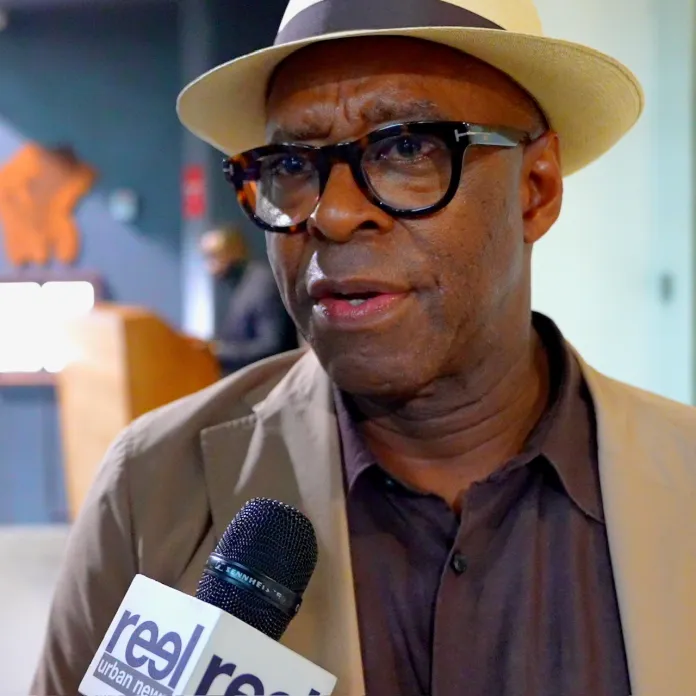
Vance concluded the panel by introducing his young adult children, students at Harvard and Yale. “I could have very well said, ‘Y’all stay home, I’m going to do this little thing,’” he reflected. “But I said it’s important that you know who W.E.B. Du Bois was, don’t wait as I did to only find out later how great this man was.”
As the PBS American Masters premiere approaches, W.E.B. Du Bois: Rebel With a Cause stands as both tribute and revelation, a cinematic testament to a man whose intellect and conviction reshaped the American conscience. Through Rita Coburn’s direction and the commanding interpretations of Common, Jeffrey Wright, Viola Davis, and Courtney B. Vance, the film invites a new generation to engage with Du Bois not as a distant historical figure but as a living force whose voice and ideas continue to speak, challenge and inspire.