W.E.B. Du Bois said it in 1903: “The problem of the twentieth century is the problem of the color line.” Over 120 years later, that line hasn’t moved much.
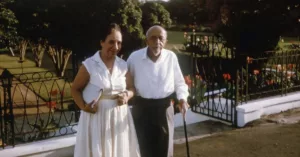
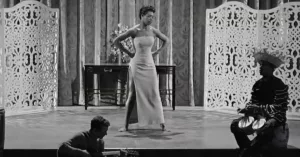
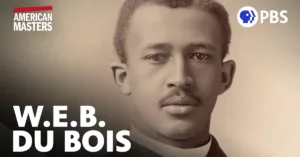
Peabody Award-winning filmmaker Rita Coburn takes a hard, unflinching look at the man behind that declaration in “W.E.B. Du Bois: Rebel With A Cause,” a new two-hour documentary premiering Tuesday, May 19 at 9 p.m. ET on PBS as part of the “American Masters” series. Actor Courtney B. Vance is among those lending his voice to the film – and when he talks about Du Bois, it’s clear he’s not just reading words off a page.
“Because we’re continually trying to figure out what to do with people of color,” Vance said, when asked why Du Bois still matters right now. “This country does not want to include them.”
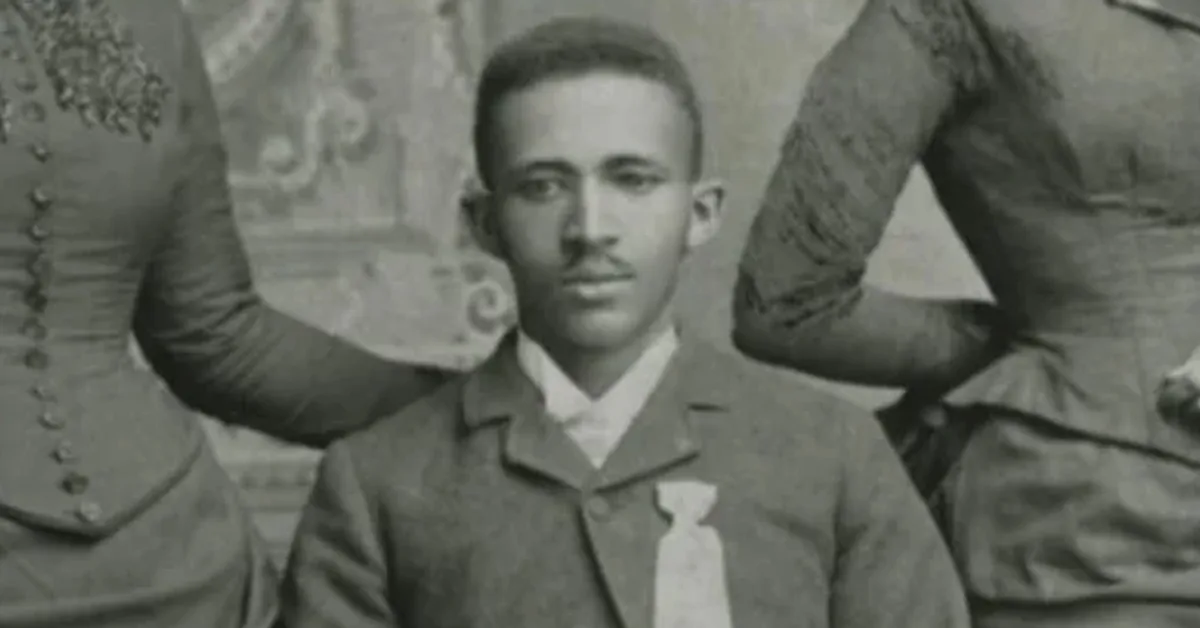
The documentary follows Du Bois from his birth in 1868 – just five years after the Emancipation Proclamation – to his death on the eve of the 1963 March on Washington. Vance described that sweeping historical arc as a lens onto the country itself. “He lived through from the end of Civil War through into the beginning of the Civil Rights Movement,” he said. “He lived that entire journey. We see the country’s journey to dealing with people of color through his life.”
Central to that journey is Du Bois’s break with Booker T. Washington, who believed Black Americans should trade political rights for economic ones – a position known as the Atlanta Compromise. Du Bois saw it differently.
“W.E.B. Du Bois said, whoa, whoa, whoa, what you talking about? You can’t do that,” Vance recalled. “Our rights are inalienable. That’s what my constitution said.” And when the Depression hit and FDR needed the South more than he needed Black voters, the betrayal just kept going. “Black people in the depression were on their own,” Vance said. “As they all – as we always are.”
The pattern of betrayal didn’t stop there. Vance pointed to the Red Summer of 1919, when Black soldiers returning from World War I were met not with gratitude but with violence. He described one incident – a soldier attacked in his uniform, blinded before he could even get off a bus. “That’s what they feel about us,” he said. “That’s what they’ve always felt about us.”
Vance connected that history to a fundamental contradiction at the heart of American ideals. “They may say that all men are created equal… but that’s not what they mean,” Vance said. He invoked Dr. Martin Luther King Jr.’s famous framing of the moment: “As MLK said when he came to ‘I Have a Dream’ season, I’m here to cash a check that is listed as insufficient funds.” For Vance, that check is still bouncing. “So that’s where we’re at. There’s insufficient funds,” he said plainly. “Stop trying to say that’s who you are, because that’s not who you are.”
Du Bois died at 95, and after a lifetime of fighting, the U.S. government took his passport and called him a communist simply for turning to countries that were willing to deal with him on equal terms.
“The country makes you feel that you’re crazy because if you don’t support them, you’re unpatriotic,” Vance said. “If you do support them, they don’t support you.”
He reflected on what two world wars and a lifetime of activism ultimately taught Du Bois – and what it still teaches today. “So what do you do? I mean, he tried twice. He went to two world wars and fought. We went to two world wars and fought and came back and you killed us,” Vance said. “So what does that tell us? We got to do our own thing. Booker T. Washington was right. We got to do your own thing, get your own schools, get your own businesses.” But even self-determination, he noted, has been met with destruction. “We do that, Tulsa, and you burn the town down.”
“W.E.B. Du Bois: Rebel With A Cause” features dramatic readings by Vance alongside Common and Jeffrey Wright, with narration by Viola Davis. The film draws from Du Bois’s books, speeches, articles, and archival audio, and features commentary from scholars including Henry Louis Gates Jr., Nikole Hannah-Jones, Eddie Glaude Jr., Eric Foner, and Imani Perry, among others.